How a steam espresso maker works
The hardware and physics powering my 1985 Krups espresso machine
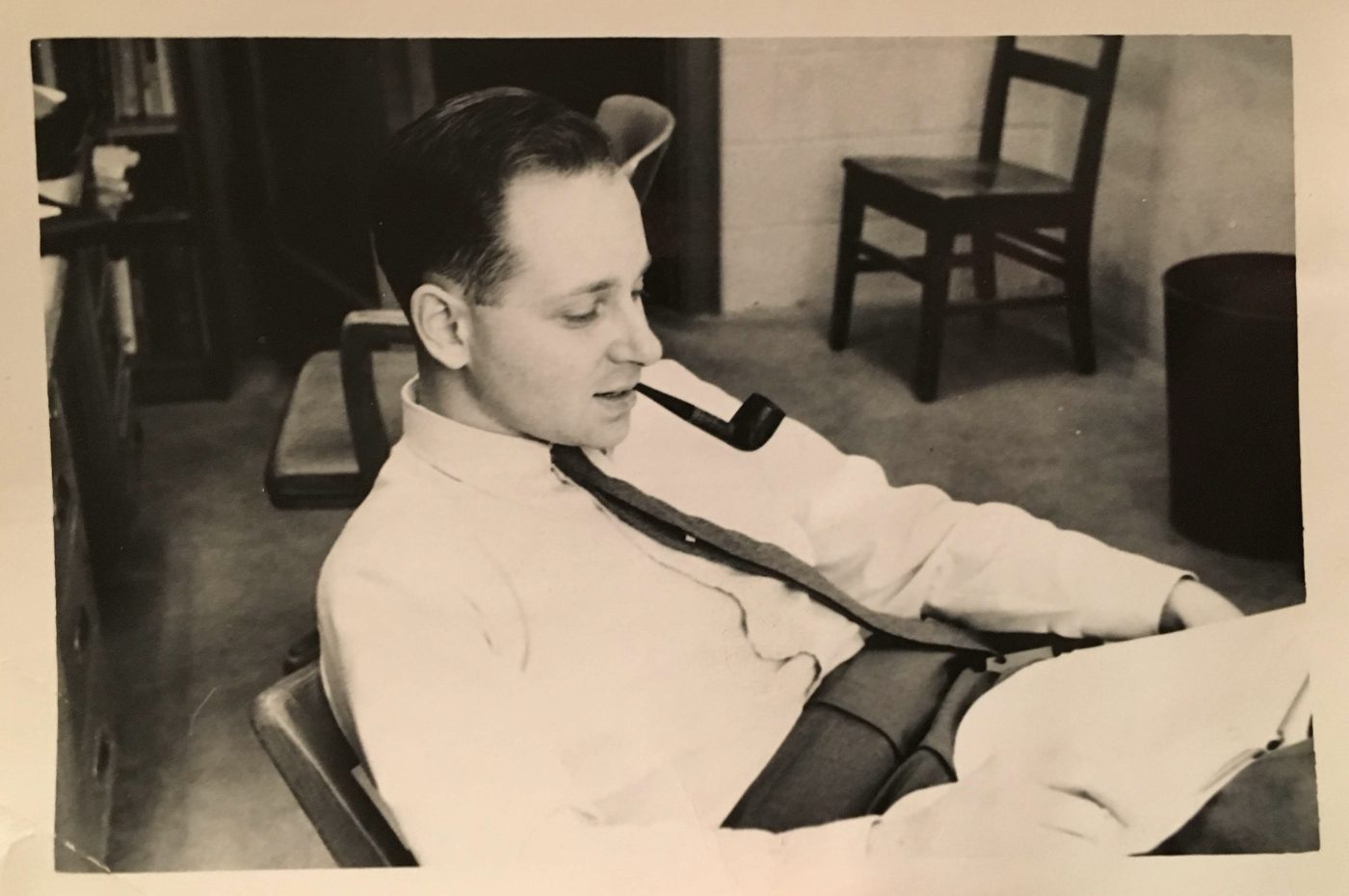
For my grandfather, Norman Fuchs, a brilliant physicist—and even better grandfather. He used this little espresso maker every morning for 40 years; I’ve used it for two.He would not like that I’ve simplified some of the math throughout this post. And he would definitely groan at the Pedro Pascal meme.
Krups Espresso Mini 963, pulled apart (side view)
How it works
Step through a brew to see what each part does.
Espresso is defined by pressure
Espresso and pressure share the Latin root pressus, meaning “pressed.” This is fortunate, because my grandfather thoroughly enjoyed both coffee and Latin.
Water, heated, becomes steam. Steam takes up more space than the water it came from. As steam builds up, trapped, it begins pressing harder and harder against the water below. Pressure builds (P).
But wait, there's an escape hatch! The riser tube opens to the room's air, with pressure P₀ (P > P₀). Seizing its opportunity to escape the relentless steam pressure, water begins shawshanking its way up and out the riser tube.
Once steam pressure exceeds the weight of the water going up the tube, hot water is propelled out, through your coffee grounds, to delicious, caffeinated freedom.

A little physics: pressure is measured in pascals (Pa). Regular Palo Alto air is ~101 kPa, roughly 1 "bar." Fancy espresso machines are "9 bar," meaning the incremental pressure they produce is ~9x regular air. My humble Krups maxes out around 3 bar, which is fine by me—I'm a 3 bar kind of guy. Here’s a standard steam table, for reference:
| Boiler temperature | Steam pressure (absolute) | Extra push beyond room air |
|---|---|---|
| 100 °C | 101 kPa (1.01 bar) | 0 kPa (0 bar) |
| 110 °C | 143 kPa (1.43 bar) | about 42 kPa (0.42 bar) |
| 120 °C | 199 kPa (1.99 bar) | about 98 kPa (0.98 bar) |
Drag the slider below to see how steam pressure lifts water.
It takes ~1 kPa to push the water up the pipe. All the remaining pressure is used to press the water through the packed coffee grounds. The finer the grind, the more pressure it takes to get through them (which is why drip coffee uses a coarser grind).
A coil of wire heats the water
I remember sitting at the kitchen table on the phone with my grandfather, asking him to explain electricity to me. Given he was plucked from Staten Island obscurity at 16 as a winner of the “super bowl of science,” Westinghouse Electric’s talent search, and given a full ride to study physics at Carnegie Mellon — he seemed sufficiently qualified.
Quick vocab: Voltage (V) is how hard your wall outlet pushes electric charge. Current (I, from the French intensité de courant, duh) is how much charge flows per second, measured in amps. Resistance (R) is how much the wire fights that current.
A thin wire coil provides the resistance. As charge squeezes through the wire, it shakes the metal’s atoms. That shaking is heat.
Power (P again) measures how fast the charged coil generates that heat. My mighty Krups provides 800 watts of power, when plugged into a standard 120 volt wall outlet.
The on/off switch completes the connection (a circuit), from the outlet to the coil and back. When off, the loop is broken; air acts as an insulator blocking the current. When flicked on, metal meets metal, the loop closes, and current flows through the coil. Current (I) = Power (P) / Voltage (V), implying the current flowing through our circuit is 6.7 amps.
Press the switch below to see how the Krups’ coil boils water, to create steam pressure.
The loop is broken, so nothing flows.
Now, aren’t you curious how long my Krups takes to boil the water? Just for fun, let’s do a little algebra to figure it out.
First, let’s find the energy needed to boil the water.
Let’s say you want to make a cup of espresso. You need to raise the temp of 300 ml (0.3 kg) of water from 20 to 100 °C (room temp to boiling). And it takes 4,186 joules of energy to heat up 1 kg of water 1 °C (just take my word for it). So,
So, it should take around 2 minutes for my 800 watt Krups to boil the water.
t = 100,000 J ÷ 800 W = 125 seconds (~2 minutes)
In the name of science, I timed my 40 year old machine this morning and it did in fact take 2 minutes. Shoutout physics!
Why drip coffee is just dirty water
Drip coffee relies on gravity. Gravity is weak as hell, pushing down with ~1 kPa. That’s a thousandth of the pressure from a 9 bar fancy espresso machine. Hence, drip requires a medium grind for the water to permeate, and it takes forever (forever = a few minutes).
The finer the grind, the more coffee surface area exposed to the water, the faster it dissolves, the richer your coffee.
I will admit, my Krups is not a 9 bar mechanical pump machine. It relies solely on steam pressure (no mechanical pump), so my morning cup is actually somewhere between dirty water and caffè crema.
| Drip | My Krups | Fancy machine | |
|---|---|---|---|
| Pressure | gravity | 2-3 bar | 9-10 bar |
| Grind | medium | fine | very fine |
| Brew time | 8 minutes | 2-4 minutes | 25-30 seconds |
| Cup | 350 mL | 240 mL | 60 mL |
But, I like it that way. My little Krups 963 may not make café-quality espresso, but it has lasted 40 years. And it’s designed simply enough that when I need to, I can (and do) actually take it apart to fix it. In an age of planned obsolescence, enshittification, and $1,800 smart fridges that unilaterally decide to start showing you ads, I’m quite happy with my $50 espresso maker.
Amidst everything, my Krups lives on. In some small way, so does my grandfather.
Big thank you to Bryan Macomber (Mechanical Pencil) and Bartosz Ciechanowski (ciechanow.ski) for inspiring this post with their amazing interactive engineering visualizations. Go check them out asap.
Sources: Krups 963 instruction book (ManualsLib) · Saturated steam properties (Engineering Toolbox) · Fortune on Samsung’s refrigerator ads